Lifting lug — linear vs non-linear steel
The same lug, the same load, two material models. One reports a stress the steel physically cannot reach; the other shows what actually happens as the metal yields. Here is the difference — and why it matters when you size a lug.
The setup
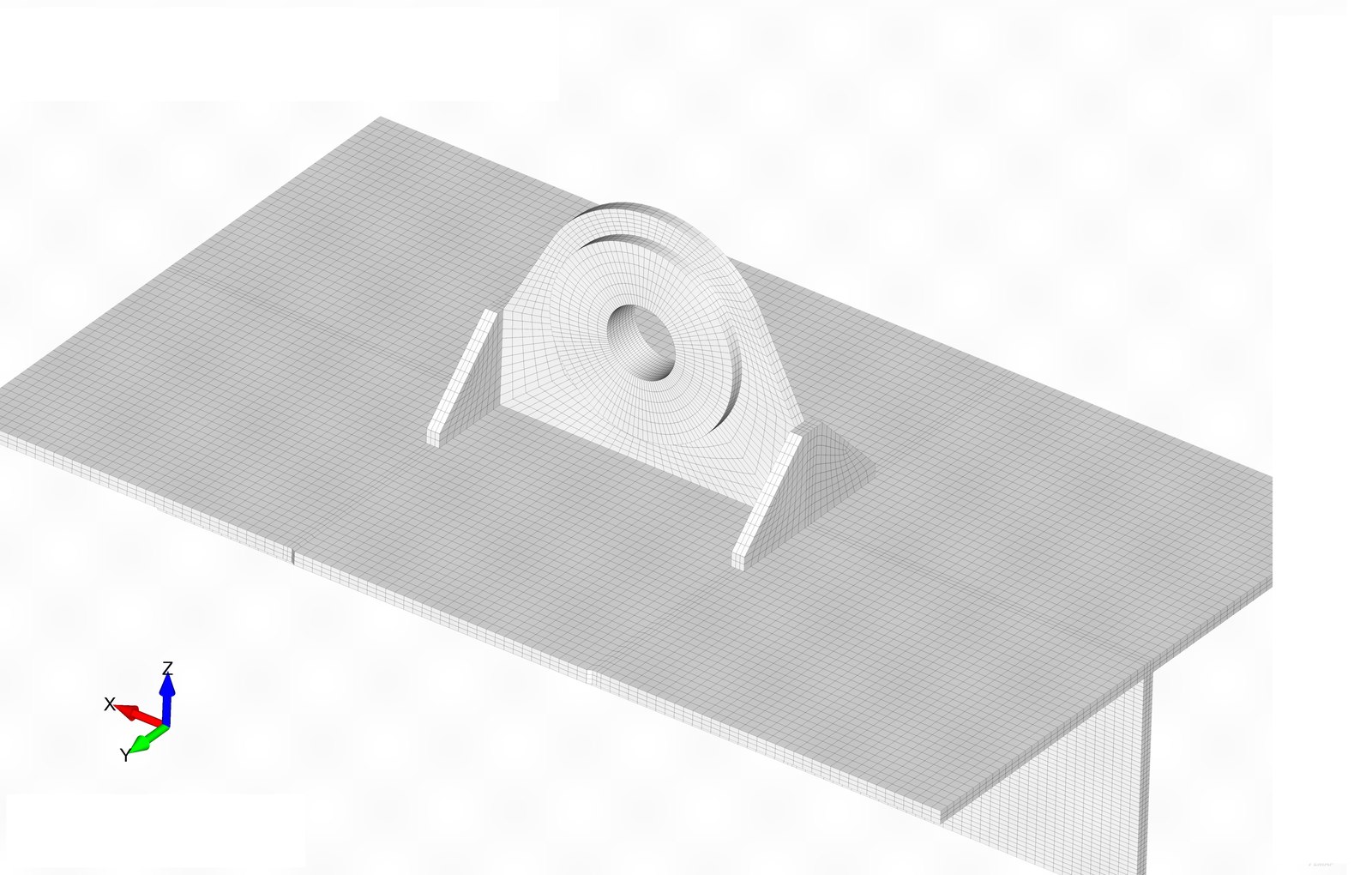
The lug was built as a solid model and meshed entirely with hexahedral elements — concentric rings around the pin bore and through the fillets, where the stress gradients are steepest. It was then deliberately loaded past yield, so the peak stress would climb above the material's capacity. That is the whole point of the exercise: to see how each material assumption handles a load the steel can't take elastically.
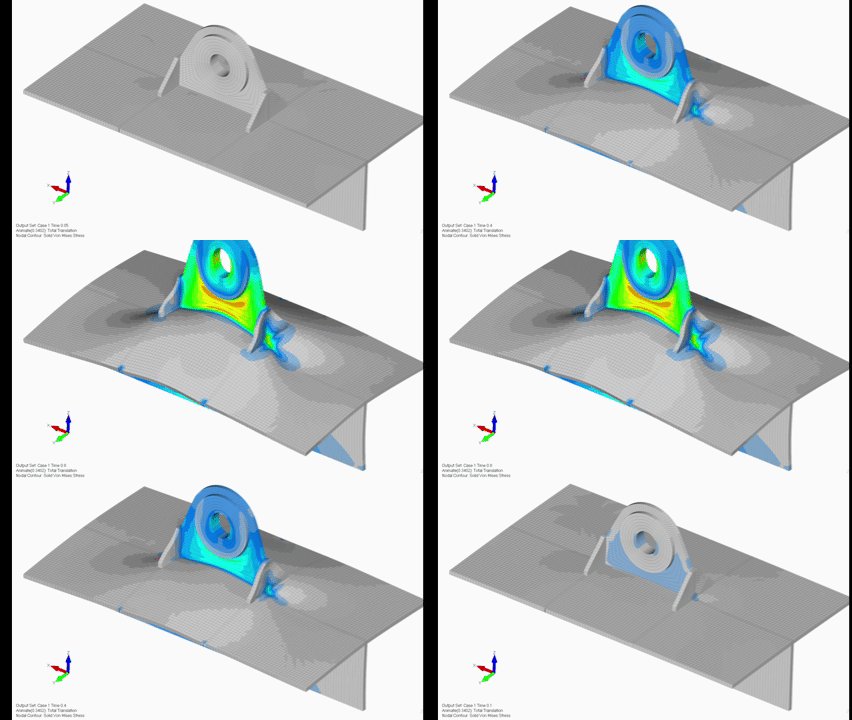
The same model was then solved twice. Once with a linear material — stress proportional to strain, forever. Once with a non-linear material, using the four-part true stress-strain curve for S355 from DNV-RP-C208, which lets the steel yield and strain-harden the way it does in reality.
What linear analysis reports
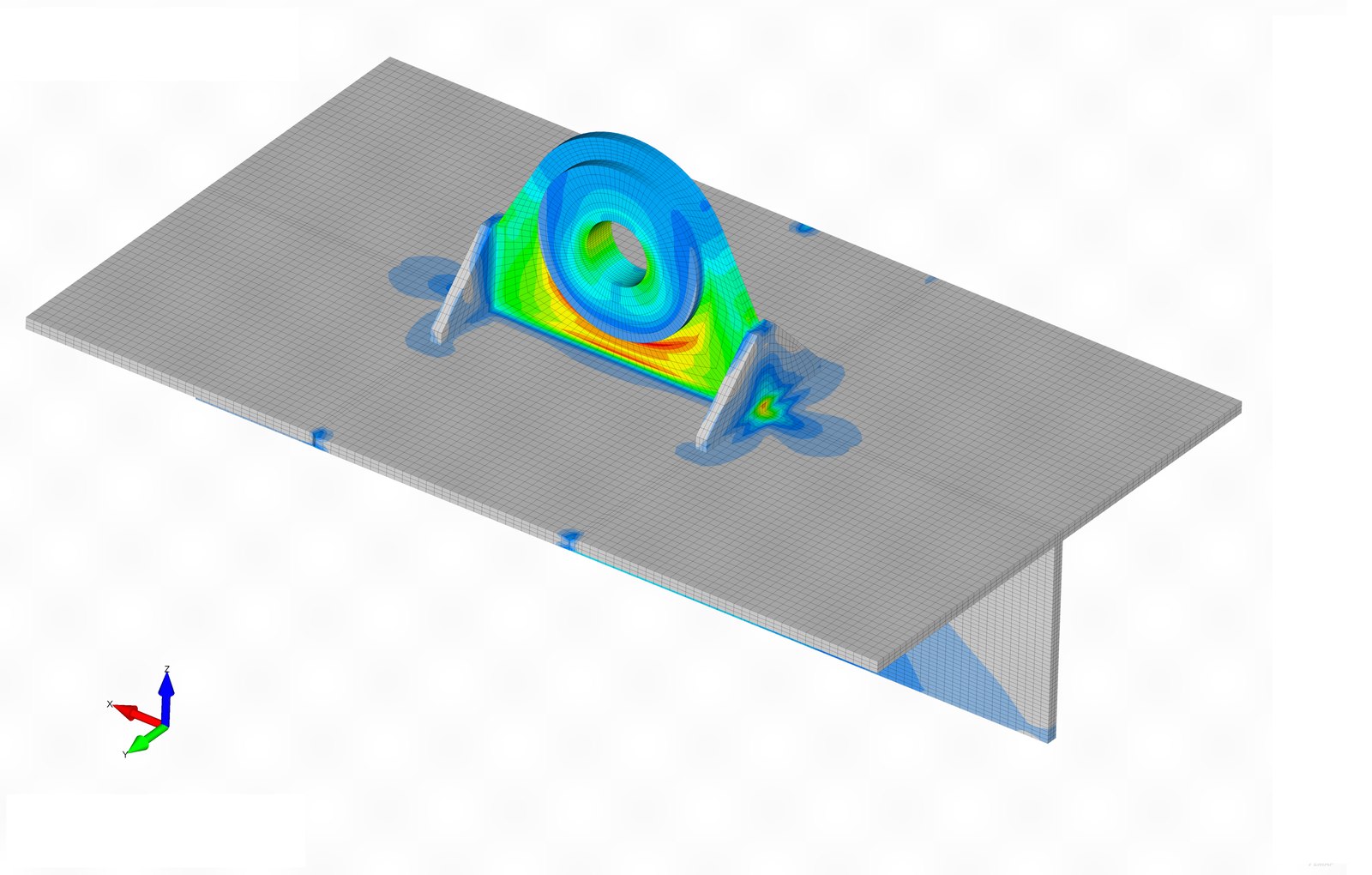
The linear run returns a peak von Mises stress of 408 MPa — roughly 14% above the 357 MPa yield. This number cannot happen in a real lug: a linear material has no yield point, so stress just keeps scaling with load with nowhere to go. The solver reports it without any warning, and an analyst who stops here would either over-design the lug to chase a phantom stress, or — worse — trust a comfortable-looking result on the wrong side of yield.
What non-linear analysis shows
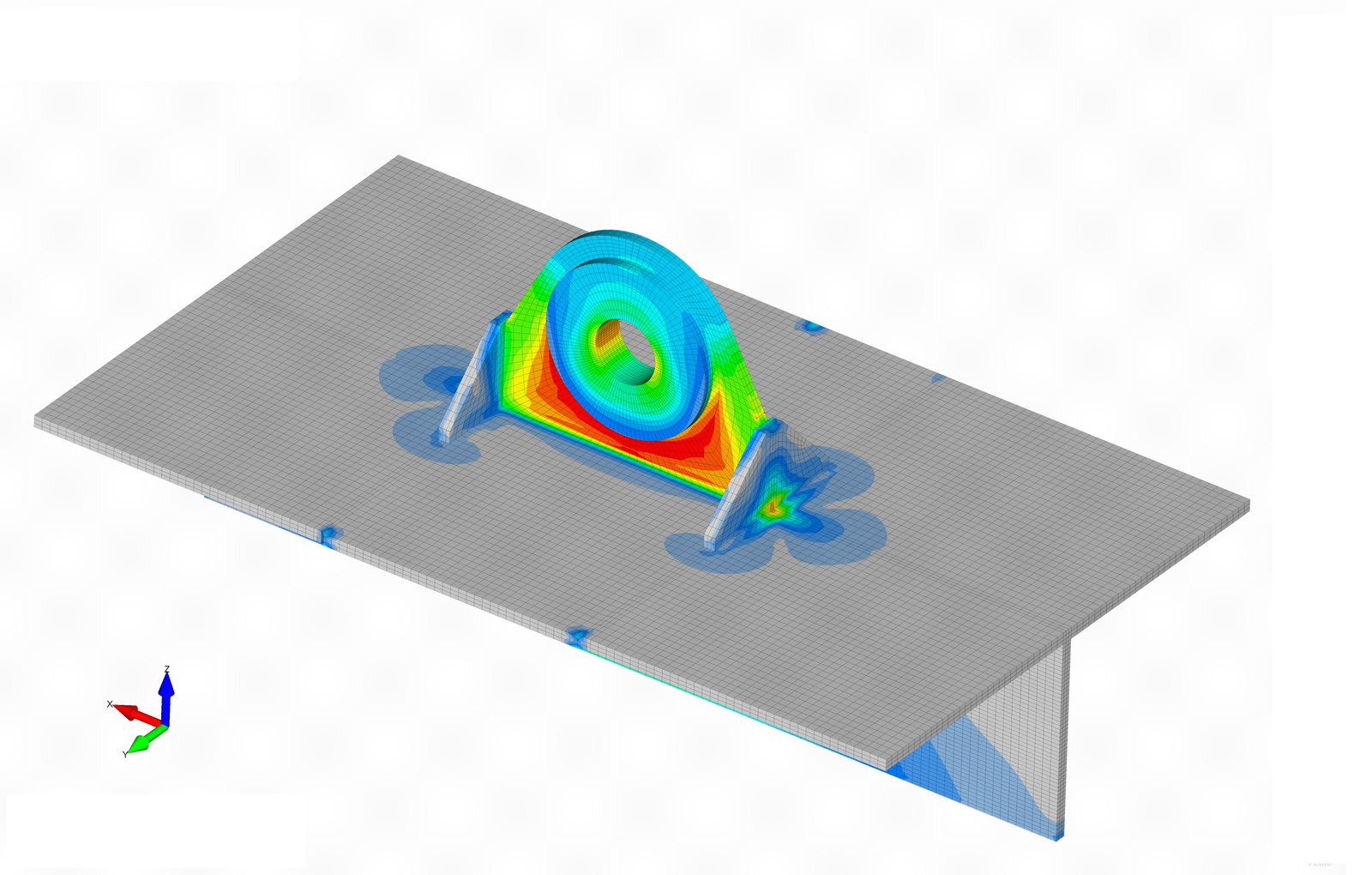
With the DNV-RP-C208 curve applied, the steel yields exactly where it should. The peak caps at 332 MPa, and the overstressed region spreads laterally into neighbouring material instead of spiking at a single point. That redistribution is real load-sharing — the mechanism a ductile steel lug actually relies on. The result is both more accurate and, in this case, more favourable: the lug has more margin than the linear run implied.
Why it matters
Above yield, a linear analysis is not conservative — it is simply wrong, and wrong in a direction that is hard to predict. For any lift point that is allowed to approach yield under proof or accidental load, the non-linear model is the one that reflects how the part behaves. It is the difference between a credible number and a misleading one.